
Cycle of Improvement: Create the Plan
Once needs are clearly understood, the next step is to build a focused and actionable plan. In this phase, teams define priorities, set meaningful goals and targets, select evidence-based strategies, and develop aligned action steps needed to put those strategies into practice.

What must change to address the identified cause?

What changes do we expect to see?

What research-supported approach will produce that change?

What must happen to implement the strategy well?
Define the Priorities and Desired Outcomes
A priority is the high-leverage change in adult practice, organizational structure, or system that the school will pursue in response to an identified cause.
A priority statement expresses the school’s theory of action: what adults will change, the improvement that change is expected to produce, and why the team believes those ideas are connected.
Priorities should emerge from the needs assessment and root cause analysis.
Do not begin by selecting a familiar initiative and then attempt to connect it to the identified need.
Priority Statement Structure
If… The change in adult practice, structure, or system
Then… The expected near-term change in implementation or student experience
And… The longer-term student result
The format is a thinking tool, not the goal itself. A priority statement is strong when the relationship among the identified cause, proposed adult change…Then…And” Priority Statement, and expected student outcome is clear and evidence-informed.
How to Develop an “If…Then…And” Priority Statement
An “If…then…and” statement helps a team explain its theory of action: what the school will change, what that change is expected to influence first, and how it will ultimately improve outcomes for students. It should connect directly to what the team learned through its needs assessment and root cause analysis.
IF: What will adults or the system do differently?
Describe the specific change in adult practice, structure, or system that will address the identified root cause. Avoid naming only a program, tool, or broad topic.
Ask:
- What practice or condition needs to change?
- Who will do something differently?
- What will that change look like in practice?
- How does it respond to the identified root cause?
THEN: What near-term change should result?
Describe the improvement you expect to see in implementation, instruction, student experience, or access when the adult change occurs.
Ask:
- What will be different because of the adult action?
- What will students experience more consistently?
- What early evidence would indicate that the change is working?
AND: What longer-term student outcome should improve?
Identify the meaningful student result the priority is ultimately intended to influence.
Ask:
- Which student outcome is connected to the identified need?
- What should improve over time if the theory of action is correct?
- How does this outcome move the school toward its vision?
Put the pieces together
If [adults make this specific change in practice, structure, or system], then [this near-term change in implementation or student experience will occur], and [this longer-term student outcome will improve].
Example
If teachers consistently use common formative-assessment evidence to identify student needs and provide targeted support during intervention, then students will receive timely instruction aligned to their demonstrated needs, and student achievement and growth in mathematics will improve.
In this example:
- If: Teachers change how they use evidence and provide intervention.
- Then: Students receive more timely and appropriately targeted support.
- And: Mathematics achievement and growth improve over time.
Check the statement
A strong priority statement should allow the team to answer “yes” to the following questions:
- Does the “if” describe a meaningful change in adult practice or systems?
- Does that change directly address an identified root cause?
- Does the “then” describe a reasonable near-term result of the adult change?
- Does the “and” identify a meaningful student outcome?
- Is the relationship among all three parts logical and evidence-informed?
- Is the priority focused enough to guide goals, strategies, and action steps?
After establishing goals & targets, your team should have:
A focused, evidence-supported priority statement that connects an identified cause to a meaningful change in adult practice and the student results expected to follow.
Select Evidence-Based Strategies
What is an evidence-based strategy?
An evidence-based strategy is a research-supported approach selected to address the identified cause and achieve the school’s goals.
ESSA Tiers
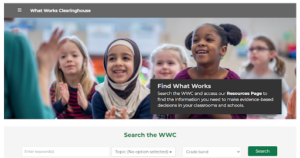
The ESSA tiers describe the strength of the existing research evidence. Teams can use the Evidence Resource Center and What Works Clearinghouse to investigate potential strategies, while also examining local fit, required conditions, and anticipated effects.
In addition to meeting ESSA’s Tiers of Evidence, schools should consider the following questions:
- Does the strategy address this school’s identified cause?
- Can the strategy be implemented successfully in this context?
Evidence: What research supports the strategy?
Fit: Does it address our identified cause, population, and context?
Feasibility: Do we have the time, capacity, resources, and conditions to implement it well?
Strong research evidence does not guarantee success in every school. Teams must consider both the quality of the evidence and the fit between the strategy, the identified need, and the school’s implementation capacity.

By the end of this step, your team should have:
An evidence-based strategy that addresses the identified cause, fits the local context, can feasibly be implemented, and has clearly defined implementation expectations.
🥅Goals define the measurable outcomes the school expects to achieve by the end of the school year.
🎯Quarterly Targets establish the shorter-term benchmarks the team will use to determine whether progress is on track.